Introduction to Occlusion

Author
Date Released
Sum & Leah
08/07/2020

Definitions and Terminology

Intercuspal Position (ICP) /Centric Occlusion (CO)Contacts that occur when patient fits their teeth together with maximum inter-cuspation (the most contacts).  
Retruded Axial Position (RAP)/Centric Relation (CR)Only position that is also reproducible in an edentulous arch. It is a jaw relationship.  
Retruded Contact Position (RCP)First contacts/contacts made when the TMJ is placed into retruded axial position (RAP)
Terminal Hinge AxisImaginary line/axis between both condyles. It is joining the centres of rotation when the mandible is closing in the final stages (just rotational phase of movement).  
Posselts EnvelopeThe envelope of movement made by the mandible. It is measured from the incisal tip.  
Posterior guidance system of the MDProvided by the TMJ. As the condyle moves in joint, the mandible moves along a guidance pathway determined by the intra-articular disc and the glenoid fossa.  
Anterior Guidance Any teeth touching on protrusive/lateral movements of the mandible. This refers to all teeth that occlude during these movements, as they are all anterior to the TMJ.
It does not refer to the anterior teeth, which is a common misunderstanding. This can be classified as incisal guidance. 
Canine Protected OcclusionWhen canine guidance is present in excursive movements, it results in open bites in all other contacts.  
Group FunctionContacts shared between several teeth on the working side during lateral excursion.  
The most forward contact is earliest and hardest.
Working side interference Heavy or early occlusal contact towards back of the mouth during excursive movements- preventing the excursive movement of the mandible and disrupting it, on the same side as the direction the mandible is going.  
Non-working side interferenceHeavy or early occlusal contact towards back of the mouth during excursive movements of the mandible and disrupting it, on the opposite side of the arch to which the mandible is moving.  
Bennetts Angle This is the angle produced by vertical movement of the non-working side condyle.
(1)

What is Occlusion?

  • Occlusion = contacts between teeth 
  • Almost all dental treatments have an occlusal consequence. 
    • This includes the repair, removal and movement of teeth
    • Consequently, this involves orthodontics, restorative, paediatric and prosthetic dentistry. Seems important now doesn't it?
  • Masticatory system = This refers to the teeth, periodontium and articulatory system. Each of which are composed of their own components:
    • Tooth system is made-up of the Enamel, Dentine and Pulp
    • Periodontal System is made-up of the Gingivae, Bone and Periodontal Membrane
    • Articulatory system is made-up of the TMJ, Muscles and Occlusion
      • A way to think about the articulatory system mechanically, is the TMJ acts as a hinge, the muscles act as a motor to drive the hinge and the occlusion is the contacts. All are connected and interdependent as a change in one of these components will have an effect on the other two factors.
        • Example: If a patient recently has a filling which is slightly too high (interfering with their occlusion). This can result in them complaining of jaw pain (TMJ), and the tenderness of their masticatory muscles.
        • For more information of the Articulatory system, check out the next lesson!

How do we look at someones occlusion?

This is called Occlusal Analysis, and it takes into consideration several aspects of a persons occlusion which needs to be noted during an examination. This includes;

  • Static Occlusion 
  • Ideal Occlusion
  • Dynamic Occlusion

The various classifications and ways to describe someones occlusion based on these headings are discussed below.

Static Occlusion

  • Angles Classification: Incisor relationship, canine relationship, molar relationship, overbite, overjet, crossbites etc.  
    • To revise Angles classification, check out the orthodontic section!
  • A patients most common bite is referred to as their intercuspal position (ICP) or Centric occlusion (CO) which is where their teeth meet together to give the most contacts.
    • If you bite together naturally, you will find that a lot of the time you will bite together in exactly the same position each time; this is called CO. Whereas if you change this bite slightly, it may feel uncomfortable or strange.
    • To understand a patients CO, they therefore must have teeth. However exodontia, orthodontics, prosthetics and restorative interventions can all change the CO therefore throughout a lifetime it can changed considerably. It also brings in the question for edentulous patients, how do we work out their occlusion?

Ideal Occlusion

  • Practically: One to which the patient is adapted and is not showing parafunction, causing pathology (eg tooth surface loss) or symptoms such TMJ pain. 
  • Theoretically: The ideal occlusion is thought to be when ICP is equal to RCP (or less than 1mm slide) 
    • With freedom in centric - what does this mean exactly?
      • Freedom in centric means that the mandible can move forward for a short distance in the same sagittal and horizontal plane (no deviation) whilst maintaining tooth contact. 
      • Simply: if front teeth hit together harder or as hard as posteriors = NO freedom in centric. Eg: Class 2 div 2 anteriors would hit if pt asked to slide jaw purely forwards or  Anterior PFMs with a palatal surface which is too thick 

Dynamic Occlusion 

  • Dynamic Occlusion refers to occlusal contacts made whilst the mandible is moving relative to the maxilla.   
  • The mandible moves by contraction and relaxation of the muscles of mastication (M.o.M), and follows paths dependent on two guidance systems: posterior guidance and anterior guidance. 
    • Posterior guidance refers to the guidance of movement due to the TMJ, not the posterior teeth!
    • Anterior guidance refers to the guidance of movement due to the tooth contacts. This means if teeth touch during lateral or protrusive movements, they are guiding the mandibles direction in relation to the maxilla.
  • Anterior guidance can be classified as;
    • Canine guidance - this means during lateral excursion of the mandible the canines are the teeth which guide the mandibles movement and the last to disclude
    • Group function - this means during lateral excursion of the mandible, the tooth contact which guides the movement is shared between multiple teeth on the working side.
      • The working side is the side which the jaw is moving towards.
      • The non-working side is the side which the jaw is moving from.
    • Working side interferences - heavy or early occlusal contact towards the back of the mouth on the side the jaw is moving towards.
    • Non-working side interferences - heavy or early occlusal contact towards the back of the mouth on the side the jaw is moving away from.
Canine Guidance
Group Function

Guidance System Theory

Posterior Guidance

  • The TMJ provide the posterior guidance system for the mandible
  • It is described that when the jaw is moving in lateral excursion, the TMJ on the non-working side is moving the most (ironic?). This is because the head of this condyle moves forwards, downwards and medially; meaning it travels the further in the joint.
    • The angle of downward movement is named the Condylar angle. This is the movement of the NWS condyle in the HORIZONTAL plane.
    • The angle of medial movement is called Bennetts angle. This is the movement of the NWS condyle in the VERTICAL plane.
  • In contrast, on the WS of the condyle, the movement is described as a non-progressive lateral movement. This is referred to as Bennett movement.
Condylar movement on Lateral Excursion

Anterior Guidance

  • This refers to every tooth contact during excursive movements of the mandible. Also referred to as the dynamic occlusion.
  • It is described that anterior guidance is preferable in the anterior tooth region, as it is is furtherest from the posterior guidance system. This could be described as a component indicative of the Ideal Occlusion.
  • In restorative dentistry, anterior guidance is confused with meaning the front teeth are involved in excursive movements.  

Relevance of Guidance systems in occlusion 

  • Most dental treatments involve occlusal surfaces of teeth.
  • Meaning this can change the guidance system of the mandible.
  • If incorrect, this leads to tooth wear/movement and fracture. 

Neuromuscular Control of Occlusion

  • The mandibular muscles provides locomotive force to move the mandible in function and parafunction 
    • Hence, understanding each muscle movements is essential!
  • Alongside voluntary neural pathways, there are also some reflexes that are involved in jaw movements.
    • Reflexes occur due to feedback by proprioreceptors in muscles and periodontal ligament.  
  • Jaw reflexes include: 
    • Jaw-closing reflex – protects mandible and associated structures during violent and whole body movement.  
    • Jaw-opening reflex – protect teeth during sudden mastication of a hard object and to protect the lips, cheeks and tongue. 
      • For example, when you try to bite into a gobstopper and your jaw opens rather than biting through it.
  • Consequently, changes of a patients occlusion are theoretically at risk of being 'sensed' by the patients nervous system.

Posselts Envelope

This is a term commonly used to describe the various movements of the mandible and its range of motion. As discussed, the mandibles ability to move is restricted based on the articular surfaces of the TMJ, occlusion and also by ligaments.

Posselt found that the outer range of movements were reproducible, and named them Border Movements which represent the envelope of motion. The various movements are described in three directions to which they are then not capable for further movement;

  • Sagittal
  • Horizontal
  • Vertical

The diagrams below, alongside the key, represent these movements described. When all three planes are combined, a 3D space is created for which all individuals are typically able to move their jaw between.

Key:

  • RCP - Retruded Contact Position
  • ICP - Intercuspal Position
  • E - Edge to Edge position of incisors
  • PR - Maximum Protrusion
  • R - Maximal Mandibular Opening, with rotation only of the condyle heads
  • T - Maximal Mandibular Opening, with translation of the condyle heads
Sagittal View of Posselt's Envelope
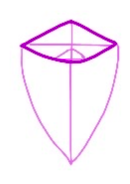
Horizontal View (shown in darker pink) shows a shape similar to a Diamond
Vertical View of Posselt's Envelope

References

Specific References:

(1) Davies, S. and Gray, R.M.J., 2001. What is occlusion?. British dental journal, 191(5), pp.235-245.


General References:

Atkinson ME. Anatomy for dental students. Oxford University Press; 2013 Mar 14.

Berkovitz BK, Holland GR, Moxham BJ. Oral Anatomy, Histology and Embryology E-Book. Elsevier Health Sciences; 2017 Jul 11.

Davies, S. and Gray, R.M.J., 2001. What is occlusion?. British dental journal, 191(5), pp.235-245.

Davies, S.J. and Gray, R.M.J., 2001. The examination and recording of the occlusion: why and how. British dental journal, 191(6), pp.291-302.

Davies, S.J., Gray, R.M.J. and Smith, P.W., 2001. Good occlusal practice in simple restorative dentistry. British dental journal, 191(7), pp.365-381.

Norton NS. Netter's head and neck anatomy for dentistry e-book. Elsevier Health Sciences; 2016 Sep 13

 

Signup to get the latest information on courses, lessons and special premium content.

We won't sell or give your information away to any third party, see our privacy policy here>.

    In partnership with...
    linkedin facebook pinterest youtube rss twitter instagram facebook-blank rss-blank linkedin-blank pinterest youtube twitter instagram